Joy as Hostages and Prisoners Freed
BBC News
This video can not be played
The families of the last 20 living hostages held by Hamas in Gaza have been sharing joy and relief at their return to Israel after two years in captivity
"After two years of suffering, he is here," Evyatar David's family say, while Bar Kupershtein's family say: "We did not give up faith, we did not lose hope"
The IDF says Hamas has handed over the coffins of four dead hostages – Hamas has told mediators it does not know the location of some of the other 24
In exchange for the hostages, Israel has released almost 2,000 Palestinian prisoners and detainees – one family member tells the BBC "the feeling is immense and wonderful"
Meanwhile Donald Trump and world leaders are meeting at a Gaza summit in Egypt – watch live at the top of the page
The US president hails a "tremendous day for the Middle East" as he and regional leaders sign a document to cement his Gaza ceasefire deal
Edited by Matt Spivey and Ben Hatton, with Alice Cuddy in Tel Aviv, Tom Bennett in Ramallah, Hugo Bachega in Sharm el-Sheikh and Tom Bateman travelling with President Trump
Gali and Ziv Berman on their way to the hospital after their release
Today saw 20 living hostages still in Gaza released and almost 2,000 Palestinian prisoners and detainees freed.
Here's how it played out:
A complicated process: The release of Israeli hostages took place in stages. They were released in two groups – one group of seven, and a group of thirteen. They were first handed to the International Committee of the Red Cross (ICRC) by Hamas in Gaza. They were then met by IDF troops who escorted them back to Israel.
Relief and joy: There were tears and cheers in Hostages Square to the news that the hostages were on their way home. Avinatan Or was reunited with his partner, and former hostage, Noa Argamani. Lishay Miran saw her husband for the first time since he was driven away by Hamas gunmen in his own car.
Some were not returned: Hamas announced shortly after it handed over the living hostages, that only four deceased hostages remains would be returned to Israel today. Though the Israeli defence minister condemned Hamas' "failure" to meet its commitments, the four coffins were transported back to Israel
Palestinians arrive back in Khan Younis after being released under the ceasefire agreement
Detainees released: 250 Palestinian prisoners and more than 1,700 detainees from Gaza were released today. One mother, on seeing her son again in Gaza, simply said: "thank god he is okay".
Huge crowds in Gaza: Buses of Palestinians were first seen arriving in Ramallah, in the Israeli-occupied West Bank this morning, where huge crowds and visibly emotional relatives were there to greet them. A little later in the day, released Palestinians arrived in Khan Younis, in Gaza.
Some were not reunited: In Gaza, the scene was one of stark contrast: those reuniting with family members and those learning their loved ones had been deported to the Gaza Strip and Egypt. one woman waiting for her brother says "I waited until the last prisoner got off the bus, but I didn't see him".
We'll shortly be bringing our live coverage to an end, but before we go we have one final post from BBC's Alice Cuddy reporting from Tel Aviv.
In the meantime, you can catch up with the latest coverage across the BBC:
Red cross vehicles transport hostages held in Gaza
Released Israeli hostage Avinatan Or held in Gaza since the October 7 attacks kisses his girlfriend
A man greets a freed Palestinian prisoner released by Israel
Donald Trump said the ceasefire will "hold up" as he signed a document alongside officials from Egypt, Qatar and Turkey
Emir of Qatar Sheikh Tamim bin Hamad Al Thani and US President Donald Trump at the peace summit in Egypt
During his tour of the Middle East, US President Donald Trump said today was a day people have been "working, striving, hoping and praying for".
We've taken a look back at how today's diplomacy – following the release of Israeli hostages and freeing of Palestinian detainees – unfolded:
Alaa Daraghmeh
BBC Arabic, reporting from Ramallah
Ibtisam cried after learning that her brother Mohamed was deported to Gaza.
Overwhelmed by joy and sadness, dozens of Palestinian families gathered in front of the Ramallah Cultural Palace today to wait for the return of their loved ones.
The scene was one of stark contrast: some families embrace their released relatives, while others broke down in tears upon learning their sons had been deported to the Gaza Strip and Egypt.
Exhausted by the wait, Ibtisam Omran sat on a bench awaiting the arrival of her brother Mohamed.
"I waited until the last prisoner got off the bus, but I didn't see him,” she says with a broken voice and tearful eyes.
“One of the released prisoners told me he'd seen him, but didn't know where he'd been taken. I thought he'd arrive in the West Bank, as he promised in his last phone call from inside the prison.”
For many, the joy of today was missing.
Of the 250 prisoners included in the deal, 154 were deported to Gaza and Egypt, while only 87 were released to return to the West Bank, and nine others returned to Gaza.
In the video below, you can hear more reactions from Palestinians in the West Bank on the day that saw the release of the detainees.
This video can not be played
A little earlier we heard from UK Prime Minister Keir Starmer, who spoke to reporters in Sharm el-Sheikh, Egypt.
The prime minister says he hasn't put himself forward to be on what the US plan calls the "board of peace".
This is a technocratic body that is expected to play a role in supervising the administration of Gaza for a transitional period.
Starmer says that he has put the UK forward to work behind the scenes, monitor the ceasefire and decommission Hamas's capability and weaponry.
"It is critical now that all parties follow through on the commitments" he says.
For context, under President Trump's plan, Hamas must disarm. The group has not said that it will lay down its weapons.
Hostage Eviatar David has been brought to an Israeli hospital this afternoon
Twenty hostages returned: The International Committee of the Red Cross says it facilitated the return of 20 hostages and the remains of four dead hostages to Israel.
Palestinian detainees freed: Almost 2,000 Palestinian detainees have also been returned to Gaza and the West Bank.
Israel identifies bodies: The Israel Defense Forces says four coffins of deceased hostages are now in Israel and identification procedures will now be carried out.
World leaders meet: Donald Trump and more than 20 leaders met in Egypt to sign a document related to the Gaza ceasefire deal. Trump called it a day people have been "working, striving, hoping and praying for".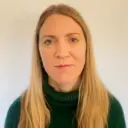 Alice Cuddy
Reporting from Tel Aviv
There are mixed emotions here in Hostages Square, Tel Aviv, following the release of the 20 living hostages, along with news that most of the deceased captives will not be returned today.
Hamas has shared a list of four hostages whose remains it said would be transferred to Israel.
Naor Cohen tells me he is "so excited to have the live hostages back".
"Finally they are home," he says. But he adds: "There are hostages in Gaza still who need to be returned."
Nearby, Yaakov and Dana Taub tell me they feel "happy and sad".
"We're happy that everyone alive is here but there are 28 bodies and they are bringing today only four. It's terrible for their families and for us also, as a nation. They are part of us," says Yaakov.
"We have to recover from all of this," adds Dana.
Four "coffins of deceased hostages" crossed into Israel a short while ago, according to a joint statement released by the Israel Defense Forces (IDF) and the Israeli security agency Shin Bet.
The remains are being taken to the National Institute for Forensic Medicine where "identification procedures will be carried out" the statement says.
It does not name them, and asks the public "to act with sensitivity and wait for the official identification".
Earlier, Hamas named four hostages whose bodies it said would be released today.
"I cannot believe that I am coming home" says Loay Ibrahim Salem Sahloul, a Palestinian detainee released today.
Loay has been in detention since January 2024, he says, and "this is the first time I am seeing the sky without a fence".
During this time, he says that Israel "didn't allow us to see the sky" adding, "we have always been deprived of freedom".
Below you can watch a clip of some of the Palestinian detainees arriving to crowds in Gaza earlier today.
This video can not be played
Palestinian detainees greeted by huge crowds in Gaza
We've been bringing you pictures from the Gaza Strip today, where buses of Palestinian detainees have been released as part of the ceasefire agreement.
"Thank God, he is okay… we are happy and relieved to see him," Safia Mahmoud Qeshta, whose son Muhammed was imprisoned for two years in Israel, tells the BBC.
In exchange for the hostages, Israel has released almost 2,000 Palestinian prisoners and detainees
"These are very joyful moments", says another woman, whose husband Abdullah is being released today.
"No matter how much I try to describe them, words cannot capture it. The feeling is immense and wonderful," she says.
Although she adds that her "joy is incomplete" as her brother-in-law is not being released by Israel today.
We heard earlier from the Hamas-run health ministry that released Palestinians had started receiving medical care at hospitals in Gaza.
In new footage shared on its Telegram account, men in grey sweatshirts can be seen being assessed by medical staff, having bandages applied and their blood pressure taken.
It says the footage was captured at the Nasser Hospital, in Khan Younis, in the south of Gaza.
Trump has just boarded the presidential airplane, Air Force One, to head back to Washington DC.
The US president briefly waved to onlookers but didn't stop to talk to the press before getting on board. Frank Gardner
Security correspondent
The UK-based charity Halo Trust has told the BBC it is mobilising a team of 100 bomb disposal experts to go into Gaza to deal with the vast amounts of unexploded munitions left over from two years of war.
Of the tens of thousands of bombs Halo says have been dropped on the territory, it says that 10% have not detonated – but it will only know the true figure once it begins work alongside construction workers.
The work is hazardous and far from straightforward. Halo believes that with so much of Gaza buried under rubble, their bomb disposal experts will need to operate on a priority-based system, much as they have been doing in Syria.
Because of the likelihood of buried human remains, they will be working with an imam to ensure that due consideration is given to Islamic rituals.
Halo estimates that getting its experts into every school, hospital and camp and clearing them of explosives will cost about £60m a year.
It say that, paradoxically, one of the most dangerous times in a conflict is when people rush to rebuild their homes before it is safe to do so.
Attia Nabil
BBC News Arabic
As we reported earlier, Egyptian President Abdul Fattah al-Sisi has awarded US President Donald Trump the Order of the Nile, Egypt's highest honour.
It was awarded in recognition of Trump's contributions to supporting strategic relations between both countries, according to a statement from the Egyptian Presidency.
The Order of the Nile, the so-called "Nile Necklace", is awarded to individuals in recognition of their outstanding contributions to the service of Egypt or humanity.
It is made of pure gold, and features a chain with three interlocking square motifs, each with a circular gold flower, adorned with rubies and turquoise stones, the corners of which are fixed at the chain's branches.
Several world leaders have received it, including former US President Jimmy Carter for his role in brokering the Egypt-Israel peace treaty in Washington in 1979.
Queen Elizabeth II of Britain received it in 1975, and South African leader Nelson Mandela was awarded the Order of the Nile in 1990.
In a new statement, the International Committee of the Red Cross confirms its role in facilitating the return of the living hostages to Israel, and Palestinian detainees to Gaza and the West Bank as part of the ceasefire agreement.
"The ICRC also transferred the remains of four deceased hostages to Israeli authorities," it says.
The statement goes on to call "for the continued implementation of the agreement to allow more families to receive their loved ones for dignified burial".
Four coffins of deceased hostages are on their way to Israel, the Israeli military says.
In a statement, the Israel Defense Forces says they will be transferred to the National Center of Forensic Medicine "for identification procedures".
The IDF doesn't name the four being returned, but earlier on Hamas named four hostages whose bodies it said would be released today.
The Israeli military says that before the coffins cross into Israel from Gaza, "IDF soldiers will drape the hostages’ coffins with Israeli flags, salute them, and recite a chapter from the Book of Psalms" in the hostages' memory.
After Sisi, Trump takes the podium, where he calls today the day people have been "working, striving, hoping and praying for".
The US president says the "historic agreement" just signed by the group of leaders means that the "prayers of millions have finally been answered".
He then says that the group has achieved "peace in the Middle East", and congratulates the room.
And Trump thanks Sisi with a handshake for recognising him with the Order of the Nile, which he calls a "beautiful title".
Trump is to be given the Order of the Nile, Sisi says.
This is "the highest state honour" in Egypt, he says, and is awarded "to heads of state or to those who render great services to humankind".
Speaking at the news conference, Sisi says Palestinians "have the right to self-determination and to aspire for a future where war doesn't loom over [them]".
He says Palestinians also "have the right to enjoy freedom and live in their independent state, a state that lives side-by-side with Israel in peace, security and mutual recognition".
We're now hearing more from Egypt's President Abdul Fattah al-Sisi who is speaking again at the peace summit in Sharm el-Sheikh.
Sisi hails today as a "historic milestone that ends an agonising chapter" and a "new era of peace and stability" in the Middle East.
We're listening across and will bring you the key lines – and a reminder that you can watch live at the top of the page.
Copyright © 2025 BBC. The BBC is not responsible for the content of external sites. Read about our approach to external linking.