EU Chief Warning as Trump to Meet World Leaders in Davos
BBC News
This video can not be played
UK Chancellor Rachel Reeves says she "would never rule anything out" when asked if the UK would impose retaliatory tariffs on the US
US President Donald Trump says he will add a 10% tariff to goods imported from eight European countries that oppose his plan to take over Greenland
Reeves tells the BBC the UK will not be "buffeted around", adding that she has been assured the "US-UK trade deal will stand"
Earlier, European Commission President Ursula von der Leyen said Europe is "fully prepared to act if necessary"
On Tuesday, French President Macron said the EU could consider a series of retaliatory options including a "trade bazooka"
It comes as the US president is en route to meet world leaders at the summit – but is running late after Air Force One was forced to turn around
The US president may enter Davos with his new rules for the world, but there are signs much of the world is ready to push back, writes economics editor Faisal Islam
Edited by Matt Spivey, with economics editor Faisal Islam reporting from Davos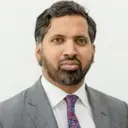 Faisal Islam
Economics editor, in Davos
Chancellor Rachel Reeves says "we would never rule anything out" about retaliatory tariff measures, following growing concerns over Trump's threats to raise tariffs over Greenland.
Speaking to the BBC at the World Economic Forum in Davos, she says the UK "would not be buffeted around" and would be acting in the national interest when dealing with the US on trade which means "bringing down trade barriers with countries around the world".
It was only in May 2025 that the UK secured an agreement with the US on trade measures following global tariffs announced on "liberation day".
Then, this weekend, President Trump threatened to add a 10% tariff to "any and all goods" imported from eight European countries from 1 February, including the UK, if those countries oppose his proposed takeover of Greenland.
French President Emmanuel Macron says the EU could consider a series of retaliatory options, but the UK chancellor tells the BBC she's had assurances from the US commerce secretary that the "US-UK trade deal will stand".
"The main issue is not Greenland now, the main issue is Ukraine", says Nato Secretary General Mark Rutte in Davos.
Speaking on a panel at the World Economic Forum, Rutte says he is "a little bit worried that we might drop the ball focusing so much on these other issues".
Despite losses in the tens of thousands in December, Russia is still increasing its attacks on Ukraine, he says.
Rutte adds that progress on peace talks and a newly-agreed €90bn loan to Ukraine from the EU commission shouldn't give Europe's Nato members the idea that they can "forget about the defence of Ukraine".
"They need our support now, tomorrow, and the day after", he says. "I need European allies to keep focus on this issue."  Laura Gozzi
Europe reporter, in Kyiv
At any other time, Ukraine could have been at the centre of the discussions at Davos – especially after the diplomatic momentum of the last few months.
But this time, Donald Trump's escalating rhetoric over Greenland means that the ongoing war in Ukraine may be overlooked.
Last week, President Zelensky said he was going to travel to the forum in the hope of signing documents on security guarantees to put off Russia from invading again in the future.
But the developments of the last few days have made some seriously question whether Ukraine could still consider security guarantees from the US as rock solid.
Many Ukrainians are convinced that, even if the fighting stopped, Moscow would always demand more of their country. "We have been fighting the Russians for hundreds of years, and we always will" is a common sentiment here in Kyiv.
Shaky security guarantees from a partner who can row back on them at any point will be viewed with extreme suspicion and anxiety in Ukraine.
Now it seems Zelensky is not going to Davos at all. Some Ukrainians will welcome the decision, which will spare him the embarrassment of being relegated to the sidelines.
But it also means more space for the Russian delegation – whose head, Kirill Dmitriev, gleefully stated that "more and more people are recognising the correctness of Russia's position" after meeting with US envoy Steve Witkoff. Paul Kirby
Europe digital editor
"We are at a crossroads," Ursula von der Leyen told the European Parliament on Tuesday
For all Europeans, not just Danes and Greenlanders, President Trump's intense focus on taking control of Greenland has called into question security and the US alliance they have taken for granted for so long.
The head of the EU's executive Commission, Ursula von der Leyen, sought to capture the mood in Strasbourg this morning when she said Europe needed to "speed up its push for independence".
The cold reality for Europeans is that they now feel they can no longer take the US for granted to help protect them from outside threats. That may well be true for the wider Nato alliance, as much as it is for the EU.
"We are at a crossroads," she told the European Parliament. "We need our own strategic approach."
One of the problems the EU always has to overcome is that it's made up of 27 democracies that don't always agree – which makes for a response to events that is often slow and often cautious.
Take last year when EU leaders appeared to dither for weeks as Ukraine's financial needs became increasingly urgent with the loss of US financial support under Trump.
In the end a €90bn support package was agreed last month, but Ukraine remains the EU's biggest security issue and there is no sign that Russia is ready to end almost four years of full-scale war.
"We will need a departure from Europe's traditional approach of caution," von der Leyen warned. There is widespread agreement on this, but no clear path for it to happen.
In our next couple of posts, we'll take a closer look at how Ukraine fits into the wider anxieties across Europe as Trump doubles down on his plan to own Greenland.
The former secretary-general of Nato, Anders Fogh Rasmussen, says the time of flattering President Trump "has ended" and we can now expect a "more firm response" from Europe.
Rasmussen, who is also the former Danish prime minister, tells the BBC that if Trump carries out the extra tariffs on eight European countries, retaliatory tariffs should be introduced, as "Trump only respects force and strength".
He tells the BBC that Nato wouldn't survive if Trump carried out his threat to take over Greenland.
"Time has come to stand up against Trump," he adds.
This video can not be played
Will Trump get friendly welcome as world leaders meet in Davos?
The World Economic Forum has been dominated by Trump's ambition to take control of Greenland, even before he has arrived in Switzerland.
The BBC's economics editor Faisal Islam explains whether Trump can expect to receive the warm reception he's used to in Davos. Wyre Davies
Reporting from Kyiv
In his recent New Year address and then after the “Coalition of Willing” summit in Paris, Volodymyr Zelensky was upbeat about hopes for a ceasefire – saying he thought an agreement to end the war with Russia was "90% ready".
The Ukrainian leader and his European allies expected that agreement, which would include post-war security guarantees for Ukraine and a multi-billion-dollar "Prosperity Plan" would be ready for signing or, at the least, there would be further discussions at Davos.
But Zelensky is not going to Switzerland – officially because of the severe energy crisis across Ukraine after intense Russian bombing of the country’s power infrastructure.
But the Ukrainian leader has also admitted, that with Donald Trump's attention focused elsewhere, there is nothing to sign and he was "choosing Ukraine over an economic forum".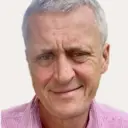 Hugh Schofield
Paris Correspondent
The "Anti-Coercion Instrument" (ACI) which President Macron has spoken of was approved by Brussels in 2023 in order to deter attempts by outside powers to force policy changes on the EU or member states.
At the time the main threat was seen as coming from China, which had recently "punished" Lithuania for its links with Taiwan by putting restrictions on bilateral trade.
Today there would appear to be a clear-cut case of another outside power – the United States – using commercial muscle to change European policy on Greenland.
In these circumstances, the "anti-coercion instrument" is an added weapon in the EU trade arsenal.
If there is agreement that coercion has been attempted by an outside power, and if negotiations to resolve the conflict fail, then the EU has enhanced powers to retaliate "within international law".
According to the EU, "The ACI permits import and export restrictions to be placed on goods and services, but also on intellectual property rights and foreign direct investment.
"Additionally, the ACI enables the imposition of various restrictions on access to the EU market, notably to public procurement, as well as the placement on the market of products under chemical and sanitary rules."
The ACI has never been used. Last year, during the negotiations over tariffs between the US and the EU, there was talk of the EU invoking it but it never happened.
On Tuesday, President Trump attended the White House media briefing – a rare appearance – to mark the one-year anniversary of his second inauguration.
Here's a recap of what we heard about Greenland and Nato:
"You'll have to find out," Trump said when asked how far he is willing to go to acquire Greenland.
He said there is "no going back" on his plan, claiming: "Greenland is imperative for national and world security."
When asked whether the possible break up of Nato was a price he was willing to pay for Greenland, Trump responded: "Nobody has done more for Nato than I have, in every way. Nato is going to be happy and we are going to be happy…"
But he earlier questioned if Nato would come to aid of the US. "I know we'll come to [Nato's] rescue, but I just really do question whether or not they'll come to ours," he told reporters
Tensions have escalated between the US and Europe as Donald Trump ratchets up efforts to acquire Greenland, threatening tariffs on eight European countries opposing his plans over the weekend.
Addressing the World Economic Forum on Tuesday, French President Emmanuel Macron said he preferred "respect to bullies" and the "rule of law to brutality".
Macron's comments followed a threat by the US president earlier that day to levy a 200% tariff on French wine and champagne, after the French premier declined an invitation to join Trump's international "Board of Peace", made up world leaders.
Macron is among those urging the EU to consider retaliatory options against US tariffs, including an anti-coercion tool nicknamed a "trade bazooka".
President of the European Commission Ursula von der Leyen says there has been a shift in the international order that "is not only seismic but it is permanent", she says.
"We now live in a world defined by raw power."
Von der Leyen says it's "imperative" for Europe to "speed up our push for independence", and get "new levers of power".
Referencing escalating tensions with the Trump over his quest to acquire Greenland, she says that "the threat of additional tariffs for security reasons is simply wrong".
She adds that Europe's leaders are meeting on Thursday to discuss its response to the US president's threatened tariffs.
"Europe prefers dialogue and solutions, but we are fully prepared to act if necessary with unity, urgency and determination." 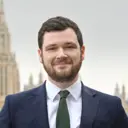 Henry Zeffman
Chief political correspondent
We've just reported that Ed Miliband told the BBC that retaliatory tariffs against the US are "not the calm or rational way forward". We can now bring you some more from the UK's energy secretary:
Ed Miliband has defended UK PM Keir Starmer's "calm" approach to handling President Trump.
The energy secretary confirmed that the prime minister is still not planning to attend the World Economic Forum in Davos, saying: "The prime minister's got other engagements and he will engage with President Trump in his own way."
Miliband told BBC Breakfast that "this is obviously a challenging situation," adding: "I think the prime minister's approach has been the right approach. He's taken a calm approach. He's sought common ground with the President of the United States, he's found common ground.
"It led to us getting the first trade deal among other things. But he's also willing to say where he disagrees with President Trump as he has on Greenland, and I think that calm leadership is what we need.
"We need to de-escalate the situation in Greenland. We need to work on Arctic security which is what we're doing with our allies, talking to the US about that, and find a way forward which isn't about tariffs or trade wars but is about us working together for the security of the Arctic and indeed to find common ground with the US." 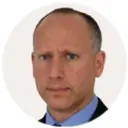 Steve Rosenberg
Russia editor
Today tabloid Moskovsky Komsomolets features a mock-up of Trump, Rubio and Vance planting a US flag on the island, an image the US president posted online.
"…Trump and Co. are about to seize Greenland," writes the paper. "For now, only in social media, but it’s the first step that counts."
In Komsomolskaya Pravda (which carries the same picture) Russia’s ambassador to Denmark predicts that "belief in the unity of Nato will dim. Although even now the Nato alliance is no group of Musketeers where it’s all for one and one for all."
Arguments and Facts prints a striking sketch of Donald Trump wearing a giant map of Greenland on his head like a hat.
"The idea of America annexing the world’s biggest island has lodged itself firmly in Donald Trump’s head," concludes the paper.
What if America were to buy Greenland?
"In American history acquiring territory is nothing new," comments Russian senator Konstantin Kosachev. "Everyone remembers the purchase of Alaska from Russia…"
But, he continues, "forcing such a transaction is absolutely illegal. This is a violation of the sovereignty of Denmark and Greenland, a violation of the letter and the spirit of international law…"
"Perhaps the US president himself doesn’t yet understand where the boundaries of the possible lie and is feeling them out."
UK energy secretary Ed Miliband says the prime minister "couldn't be clearer" about disagreeing with Trump's threat of tariffs on European countries unless they support his plan to own Greenland.
On whether or not the UK should retaliate with its own tariffs on the US, Miliband tells BBC Radio 4's Today programme presenter Justin Webb: "I don't think that's the calm and rational way forward."
"The right way forward," Milband proposes, is to "do everything we can" to avoid Trump's tariffs and a consequent trade war.
Talks about Arctic security are also important, the energy secretary adds.
Trump's tariff threats over Greenland
US President Donald Trump has threatened to impose fresh tariffs on eight allies that oppose his demands for control of Greenland.
He plans on hitting the UK, Denmark, Norway, Sweden, France, Germany, the Netherlands, and Finland with 10% tariffs on "any and all goods" if they oppose his proposed takeover of Greenland.
Trump said the tariffs would be in place by 1 February and would rise to 25% by 1 June.
What are tariffs and how do they work?
Tariffs are taxes on imported goods. Typically, the charge is a percentage of a good's value.
For example, a 10% tariff on a $10 product would mean a $1 tax on top – taking the total cost to $11 (£8.17).
The tax is paid to the government by companies bringing in the foreign products.
These firms may pass some or all of the extra cost on to their customers, which in this case means ordinary Americans and other US businesses.
They may also decide to import fewer goods.
A bit more now from US Treasury Secretary Scott Bessent, who has been taking questions from reporters in Davos.
Asked what would happen if Switzerland were to grow closer to the European Union, amid escalating tensions with the US, he says it would be "very disappointing if Switzerland decided to get on the EU bandwagon".
On Greenland, he says that he's "not going to get ahead" of the president, but that the US is "asking our allies to understand that Greenland needs to be part of the United States".
Addressing the "minor electrical issue" that forced Trump's plane to turn back to its Maryland air base, Bessent adds that he hasn't seen the updated schedule but the US president is going to be "about three hours late".
This video can not be played
Scott Bessent: 'Sit down and wait for President Trump to get here'
We're now hearing from US Treasury Secretary Scott Bessent, who is already in Davos ahead of Trump's arrival.
Speaking at the World Economic Forum, Bessent asks why doesn't Europe "sit down wait for President Trump to get here" and listen to his argument?
You can follow along with his comments in Davos at the top of this page, and we'll bring you more key lines shortly.Faisal Islam
Economics editor, reporting from Davos
It will be quite the moment for the world, and how the world is run.
Donald Trump may enter Davos like a new sheriff with his own new rules for the world, but there are signs that much of the rest of the world is now on alert, and ready to push back.
His constantly stated designs on territorial expansion, especially in the last few days, have yielded a reaction among most other Western countries.
The leaders of France and Canada referred to a new colonialism, bullying and the need for the rest of the world to work together.
The question is how far will the president articulate the new US national security strategy, which shocked Europe by praising radical opposition groups as a means to prevent what it called the erasure of civilisation.
Non-American voices here perceive a lack of appetite in the US Congress for a Greenland adventure and some skittishness in markets.
The US treasury secretary implored Europe not to panic and keep the faith, but the audience here and around the rest of Europe will get a chance to make their own judgement this afternoon
Donald Trump and his Press Secretary Karoline Leavitt spoke to media at the White House before leaving for Davos
Donald Trump is taking a team of advisers and members of his administration to the World Economic Forum in Davos.
Here's who we've heard is travelling alongside him:
People wait on the tarmac as Air Force One returned to Joint Andrews Base in Maryland
Donald Trump's plane was forced to turn back due to a "minor electrical issue" as he began the journey to Davos, Switzerland.
After takeoff, the crew on Air Force One noticed the issue, and the decision was made to turn the plane around, land at Joint Base Andrews in Maryland and board a new plane.
Reporters also noted the lights went out briefly in the press cabin, but no additional information was given.
According to those on board, White House Press Secretary Karoline Leavitt joked that, in light of the issue, the Qatari jet – an "unconditional gift" from the country to the US president, which is currently being refitted – was sounding "much better" right now.
The arrival of the president, and those travelling with him, is expected to be delayed.
In a post on social media platform Truth Social earlier, Trump wrote: "America will be well represented in Davos — by me."
We'll bring you details of who is accompanying Trump on the trip to the World Economic Forum in our next post.
Copyright © 2026 BBC. The BBC is not responsible for the content of external sites. Read about our approach to external linking.