BBC Chair to Respond to MPs After Resignations
BBC News
This video can not be played
BBC chair Samir Shah is expected to apologise in a written statement to a parliamentary committee today
BBC director general Tim Davie and CEO of News Deborah Turness resigned on Sunday night, after criticism that Panorama misled viewers by editing a speech by Donald Trump
The Telegraph published a leaked BBC memo suggesting the programme pushed two parts of Trump's speech together so he appeared to explicitly encourage the Capitol Hill riots of January 2021
The wide-ranging memo also criticised other areas of BBC News coverage – the memo's author said he sent it in "despair at inaction by the BBC Executive"
Davie says: "There have been some mistakes made and as director general I have to take ultimate responsibility" – read it in full
Speaking as she arrived at the BBC this morning, Turness says: "I'd like to make one thing very clear – BBC News is not institutionally biased"
This is seismic, writes our media editor Katie Razzall. I can't help thinking there is more to this than meets the eye
Edited by Johanna Chisholm and Emily Atkinson
The leaked memo that sparked last night’s resignations was not only critical of one edit in a Panorama documentary about Donald Trump.
In the full dossier, published by the Telegraph, former independent adviser Michael Prescott highlights several "troubling matters".
Here’s a summary of the main claims written by Prescott in the memo:
The BBC has not yet responded directly to the publication of this memo, but outgoing CEO of News Deborah Turness has said this morning the organisation "is not institutionally biased".
As we have been reporting, two senior figures at the top of the BBC resigned from their roles on Sunday evening.
Tim Davie is the BBC's outgoing director general – the most senior person in the organisation and its chief executive and editor-in-chief. He is responsible for the BBC's global workforce, running services across television, radio and online. Davie is the 17th person to occupy this role in the BBC's history.
Davie has worked at the corporation for 20 years. Before becoming director general, he was chief executive of BBC Studios for seven years.
Deborah Turness is the outgoing CEO of BBC News. She has occupied this role since 2022, overseeing news and current affairs programming.
She is responsible for a team of around 6,000, broadcasting to almost half a billion people across the world in more than 40 languages.
Turness has previously served as CEO of ITN, president of NBC News and NBC News International, and editor of ITV News.
At NBC, Turness was the first woman in US history to be president of a network news division. She was also the first female editor of ITV News, as well as the youngest ever editor of ITV News.
Peter Fincham ran BBC One's output between 2005 and 2007
A former controller of BBC One says the resignation of Tim Davie and Deborah Turness makes today “a sad day for the BBC”.
Speaking to Nicky Campbell's 5 Live phone-in, Peter Fincham says “there’s many good things" that Davie has done as director general.
But, Fincham says the BBC suffers from a “bunker mentality” during crises, adding: “one of the BBC’s worst habits is to think it’ll be alright to play dead."
“This report came in May, and they didn’t do anything about it,” he adds. 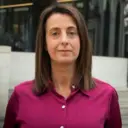 Lucy Manning
Special correspondent
A large round of applause was heard in the BBC newsroom's management area after Deborah Turness spoke to her editorial leadership team and told them the organisation is not institutionally biased, and people had to carry on doing BBC journalism.
Outgoing CEO of News Deborah Turness told reporters gathered outside the BBC this morning that the "buck stops with me"
We've just heard from departing CEO of News Deborah Turness who told reporters when she was making her way into the building this morning that the BBC is not "institutionally biased".
Before she arrived, media commentators had their say on her and Tim Davie's resignations:Lucy Manning
Special correspondent
Deborah Turness arrived at the BBC this morning looking emotional and said:
"I would like to say it has been the privilege of my career to serve as the CEO of BBC News and to work with our brilliant team of journalists."
"I stepped down over the weekend because the buck stops with me. But I'd like to make one thing very clear, BBC News is not institutionally biased. That's why it's the world's most trusted news provider."
On President Trump's comments she says: "Of course our journalists aren't corrupt. Our journalists are hardworking people who strive for impartiality and I will stand by their journalism."
When asked why mistakes on Trump, antisemitism, and women’s rights weren’t dealt with she says, “I’m sure that story will emerge”.
This video can not be played
'BBC is not institutionally biased', says outgoing BBC News CEO
BBC News CEO Deborah Turness – who resigned on Sunday – was just stopped by journalists outside the BBC's London headquarters.
"BBC News is not institutionally biased. That's why it is the most trusted news provider," she says.
More to follow.
From 09:00 GMT, Nicky Campbell will be fielding callers' questions over on BBC Radio 5 Live on the dual resignation of BBC bosses Tim Davie and Deborah Turness last night.
You can follow along live on BBC Sounds or by pressing watch live above.
You can also share your thoughts by getting in touch with us in the following ways:
Please read our terms & conditions and privacy policy. In some cases a selection of your comments and questions will be published, displaying your name and location as you provide it unless you state otherwise. Your contact details will never be published.
Asked if there has been a "coup" by the BBC board against Tim Davie and Deborah Turness – an argument made by ex-Sun editor David Yelland earlier – Dinenage says the BBC is trying to "obfuscate what the issue is".
Davie did not stand down because the board asked him to, she says. He stood down because of an "editorial failure".
The BBC has "badly" responded to editorial crises across the summer, she adds, pointing to its Glastonbury coverage, Gaza documentary and Greg Wallace on Master Chef.
"The BBC just seem to have dropped the ball at every opportunity," she says. "And that's not a board-level problem, that's an institutional problem."
We're now hearing from Culture, Media and Sport committee chair Dame Caroline Dinenage, who says she is expecting a letter for BBC Chair Samir Shah today, but that it has not yet arrived.
Last night's resignations were "avoidable", she says, adding she is "very sad" about Tim Davie stepping down.
She says Davie was an "effective leader" and a "great champion for public service media".
"But there is no escaping the fact he was very slow to act on this particular issue," she adds.
Mark Damazer now turns to other issues the BBC has been criticised for, including its handling of transgender topics and BBC Arabic's coverage of the Israel-Gaza conflict.
But he doesn't think the BBC's journalism has been one-sided.
"It is not the case that it is only one side that is complaining," he says. People sympathetic to the Palestinians' cause say the BBC hasn't been fair to them either, he adds.
"The notion that there is this widespread satisfied, smug, liberal, incompetent culture" which "pollutes and contaminates the BBC's journalism" is "wildly, wildly overblown", he says.
Mark Damazer, former controller of BBC Radio 4, says "year after year of crashing waves" against Tim Davie has "taken its toll".
"I'm very very sad about it," he tells the Today programme. "I think Tim's an outstanding director general."
He says he welcomes debate about the BBC's impartiality, but that it is "absolutely wrong" to say that the corporation is "systemically biased", adding that he does not agree with Sir Charles Moore.
The "overwhelming majority" of what the BBC does is "excellent, and it doesn't happen by accident", he adds. Impartiality is "centre" to the BBC's culture and it "largely succeeds" on this front.
We're now hearing from Conservative MP Dame Caroline Dinenage, the chair of the Culture Committee in the House of Commons, and Mark Damazer, former controller of BBC Radio 4, on the Today programme.
We'll bring you key lines here, but you can also follow along by pressing watch live above.
The BBC is now "in chaos, rudderless and leaderless" and the situation has been left to get "completely out of hand", says Sir Craig Oliver.
The former BBC News controller, who was later communications director for David Cameron, says there is "an issue with the governance of the institution".
In times of crisis, the BBC's chairman needs to "step in" to protect the corporation, he tells Radio 4's Today programme. In this case, Samir Shah has "not done that properly", Oliver says.
"We still do not know what the BBC story is about this around what happened here," he adds. 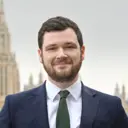 Henry Zeffman
Chief political correspondent
There’s been no shortage of reaction from politicians of all stripes to Tim Davie’s resignation.
Many politicians, especially in government, will quickly become acquainted with whoever becomes his successor.
That’s because the BBC’s Royal Charter is up for renewal imminently.
The charter is the agreement with the government which sets out the BBC’s terms of operation.
The current one began on 1 January 2017 and expires on 31 December 2027.
Among other things, the charter sets out the funding model of the BBC, namely the licence fee, about which there are fundamental questions heading into the second quarter of the 21st Century.
Davie, on the BBC side, and Lisa Nandy, the culture secretary, have both discussed different options for replacing the licence fee publicly.
More generally, both sides have been shaping up for this negotiation and honing their arguments for some time.
But the government will now be waiting to see if the new leadership of the BBC comes to have a different perspective on what they want out of the negotiation.
And all this at a time when patience with the BBC in different parts of the political arena is wearing thin, perhaps like never before.
Tim Davie has been BBC director general since 2020
Roger Mosey is now asked whether the BBC needs restructuring – and how he would do this.
The problem for Tim Davie is that he is not a journalist, Mosey says. He comes from a marketing background.
He also didn't have a deputy director general – someone to "catch the flak" and take the blame if things go wrong.
This has meant a number of controversies have landed on Davie's desk, Mosey says – pointing to issues that have arisen on Strictly Come Dancing and Master Chef, as well as the latest Panorama scandal.
We're now hearing from Roger Mosey, former director of news at the BBC. He tells BBC Breakfast that he is "very sad" to see Tim Davie go.
But he says there was an "indefensible piece of journalism" in the Panorama programme. He adds that the BBC knew about it and seems to have been slow to respond.
There has been some internal politics too, Mosey suggests. He says the board is "divided" about "what it thinks about news and who should be running news".
He calls it a "terrible mess".
Charles Moore, former editor of the Daily Telegraph, says the resignations will give the BBC "the chance to take impartiality seriously".
"It's always [reporting] from a sort of metropolitan left position. Absolutely consistently, that's how the bias is," he tells BBC Radio 4's Today programme.
He says the issues have included "the most extraordinary degree of systemic bias, particularly in BBC Arabic" in coverage of the Israel-Gaza conflict.
(That was one concern raised by former BBC editorial standards adviser Michael Prescott in his dossier – the dossier itself quotes BBC global director Jonathan Munro as saying: "While no service is perfect and all of us can make mistakes, we believe BBC Arabic delivers against (its) responsibilities with the vast majority of its reporting and analysis.")
Lord Moore also dismisses the suggestion of a "coup" by the BBC Board, which was made by former Sun editor David Yelland just before him on the Today programme.
"The absolutely key thing about the BBC for its survival, and why it matters, is its impartiality," Lord Moore says.
"And that is what Tim Davie announced, when he became director general, he would try to enforce, and which he didn't succeed in enforcing. And therefore he's gone.
"And if I may say so, I think that the way this has been covered this morning shows the problem you collectively have, which is that you're already trying to accuse people of coups and that sort of thing, rather than tell the listeners what this internal memo said and how serious the accusations in it are."
We're now hearing from David Yelland, former editor of the Sun and now a BBC presenter. He says the resignations of Tim Davie and Deborah Turness are the result of a "coup" from the board.
(The BBC Board, led by Samir Shah, ensures "that the BBC delivers its mission and public purposes" – it includes Davie and Turness).
The board has "systematically undermined" Davie and his senior team for a long time, Yelland tells BBC Radio 4's Today programme.
He claims elements of it have worked with hostile newspaper editors, a former prime minister, and enemies of public service broadcasting.
There is a reason the BBC is the "most trusted organisation in the world" and newspapers are not, he adds.
Sir John Whittingdale, who was culture secretary under the Conservatives, says director general of the BBC is "one of the toughest jobs in broadcasting".
The corporation produces "thousands of hours of content" and "things go wrong", he tells BBC Breakfast.
What's different this time, he says, is that when a report raised concerns about these issues to the BBC board, "nothing happened".
(As our previous post said, former BBC adviser Michael Prescott says he wrote his memo in "despair at inaction by the BBC Executive when issues come to light").
Even after Prescott's memo was published in the Telegraph, Whittingdale says the BBC "should have reacted far faster".
He adds that he's sorry Tim Davie has resigned, describing him as a "decent man who's doing an incredibly hard job".
"But I think there have been so many failures and actually the fact that nothing was done is why he and Deborah Turness felt it necessary to resign."
Copyright © 2025 BBC. The BBC is not responsible for the content of external sites. Read about our approach to external linking.